15 Signs You Need Roof Repairs
Your roof is arguably the most critical component of your home, silently protecting you and your family from Queensland's harsh elements day after day. Yet it's often the most overlooked part of home maintenance—until something goes wrong. Here on the Gold Coast, our roofs endure a punishing combination of intense UV radiation, tropical storms, salt-laden coastal winds, and high humidity that can accelerate wear and damage far faster than roofs in milder climates.
As a QBCC licensed roofing specialist with over 25 years of experience serving Gold Coast, Brisbane, and Sunshine Coast homeowners, I've seen firsthand how a small, easily repairable issue can transform into a major structural problem when left unaddressed. The good news? Most roofing problems give you warning signs well before they become emergencies—if you know what to look for.
In this comprehensive guide, I'll walk you through 15 telltale signs that your roof needs professional attention, explain why each matters in our unique Queensland climate, and help you understand when you can safely monitor an issue versus when you need to call in the experts immediately. By the end, you'll have the knowledge to protect your biggest investment and potentially save thousands in preventable damage.
Understanding Your Roof's Lifespan in Queensland
Before we dive into the warning signs, it's important to understand what affects your roof's longevity here in Southeast Queensland. Our climate presents a unique combination of challenges that roofs in southern states simply don't face.
Climate Factors Affecting Gold Coast Roofs
The Gold Coast receives an average of 1,400mm of rainfall annually, with most falling during our intense summer storm season from November to March. During this period, roofs can be subjected to:
- Severe thunderstorms with damaging winds exceeding 90km/h
- Large hail events that can occur several times per season
- Torrential downpours delivering 50-100mm in under an hour
- Extended wet periods promoting mould and moss growth
Add to this our extreme UV exposure (Queensland has some of the highest UV levels in the world), salt air corrosion within 10km of the coast, and summer temperatures that can push roof surface temperatures above 70°C, and you begin to understand why Gold Coast roofs age faster than the Australian average.
Average Roof Lifespans by Material
Under Queensland conditions, typical roof lifespans are:
- Colorbond steel: 30-50 years (with proper maintenance)
- Terracotta tiles: 50-70 years (though bedding and pointing need attention every 15-20 years)
- Concrete tiles: 30-50 years
- Asphalt shingles: 15-25 years
- Metal roof sheets: 25-40 years depending on coating quality
These figures assume regular maintenance and inspections. Without them, lifespans can be cut by 30-50%.
The 15 Warning Signs Your Roof Needs Attention
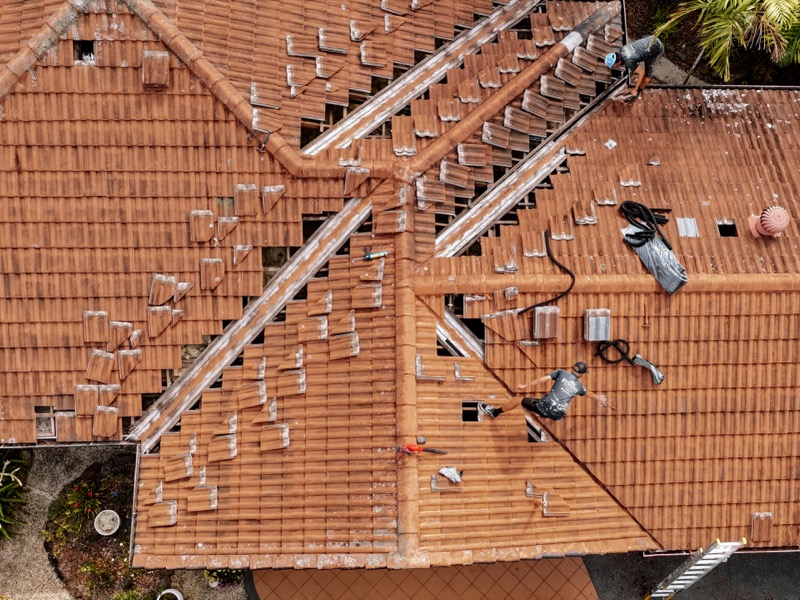
Sign 1: Missing, Cracked, or Broken Roof Tiles
This is often the most visible sign of roof damage and one of the most common issues I encounter on Gold Coast properties. Tiles can crack or break due to:
- Storm damage from hail or wind-blown debris
- Thermal expansion and contraction from our extreme temperature variations
- Foot traffic from poorly executed previous maintenance
- Age-related brittleness particularly in concrete tiles over 25 years old
What to look for: From ground level, scan your roof for tiles that appear different in colour (indicating replacements), gaps in the tile pattern, or visible fragments in your gutters. After storms, walk around your property looking for tile fragments on the ground.
Why it matters: A single missing tile exposes your roof membrane and timber structure to water ingress. In our climate, this can mean rapid deterioration—I've seen roof timbers develop significant rot within just 6-12 months of a tile going missing.
Action required: Missing or broken tiles should be replaced within 2-4 weeks, sooner if rain is forecast. Typical cost for tile replacement ranges from $500 to $1,500 depending on the number of tiles and accessibility.
Sign 2: Sagging or Uneven Roof Lines
A sagging roofline is a serious structural warning that requires immediate professional assessment. When you look at your roof from the street, the ridgeline should be straight and the roof planes should be flat and even.
What causes sagging:
- Water damage to roof timbers causing rot
- Inadequate structural support from original construction
- Termite damage to load-bearing timbers
- Accumulated weight from multiple tile replacements without removing old bedding
- Failed roof battens unable to support tile weight
The Queensland connection: Our humidity levels accelerate timber deterioration once water ingress begins. Termites—a significant problem throughout Southeast Queensland—are attracted to moisture-damaged timber, creating a dangerous combination.
Action required: This is a call-the-professional-today situation. A sagging roof can progress to partial collapse, particularly during storms when added water weight increases stress on weakened structures. Assessment costs are minimal compared to the potential consequences of delay.
Sign 3: Water Stains on Ceilings or Interior Walls
Water stains are the most obvious indoor indicator of roof problems, yet many homeowners dismiss small stains or attribute them to other causes.
What water stains indicate:
- Active leaks from damaged tiles, flashing, or penetrations
- Condensation issues from inadequate roof ventilation
- Valley or gutter overflow during heavy rain
- Flashing failures around chimneys, skylights, or vent pipes
Identifying the source: The stain location doesn't always indicate where the leak originates. Water can travel along roof timbers and ceiling joists, appearing metres away from the actual entry point. This is why professional leak detection is often necessary.
The hidden danger: Water stains you can see represent a fraction of the moisture in your ceiling space. For every visible stain, there's typically 3-5 times more water damage hidden above. This moisture promotes:
- Mould growth (a health hazard, particularly in Queensland's humidity)
- Electrical hazards from wet wiring
- Ceiling collapse in severe cases
- Insulation damage reducing energy efficiency
Action required: Any new water stain warrants investigation within 1-2 weeks. Expanding stains or those appearing during rain require urgent attention.
Sign 4: Damaged or Deteriorating Flashing
Flashing—the metal strips that seal joints and transitions in your roof—is one of the most failure-prone components, yet often overlooked during inspections.
Where to find flashing:
- Around chimneys and flue pipes
- At roof-to-wall junctions
- In roof valleys
- Around skylights and roof windows
- At vent pipe penetrations
- Along parapet walls
Signs of flashing failure:
- Visible rust or corrosion
- Lifted or separated edges
- Missing sections
- Cracked or dried-out sealant
- Staining on walls below flashing points
Why Gold Coast roofs are vulnerable: Salt air accelerates metal corrosion dramatically. Properties within 5km of the coast can experience flashing deterioration 2-3 times faster than inland homes. Standard galvanised flashing may begin corroding within 10-15 years in coastal locations.
Action required: Flashing repairs typically range from $300 to $1,500 depending on location and extent. This is one area where early intervention saves significant money—failed flashing is a leading cause of major water damage.
Sign 5: Granules in Gutters (For Asphalt Shingle Roofs)
If you have asphalt shingles—common on some Gold Coast homes, particularly those built in the 1980s-90s—finding granules in your gutters is a significant warning sign.
What granule loss means:
Asphalt shingles rely on their mineral granule coating for:
- UV protection (critical in Queensland)
- Fire resistance
- Aesthetic appearance
- Waterproofing integrity
When granules shed excessively, it indicates the shingles are reaching end-of-life. Our intense UV exposure accelerates this process considerably compared to southern states.
Normal vs. concerning granule loss:
- New roofs shed some granules initially—this is normal
- A light dusting in gutters after storms is expected
- Concentrated granule accumulation or bare patches on shingles indicates failure
Action required: Significant granule loss typically means roof replacement is needed within 1-3 years. Budget planning should begin immediately, with replacement costs for asphalt shingles ranging from $19,999 to $35,000 for an average Gold Coast home.
Sign 6: Moss, Mould, or Algae Growth
Green or black growth on your roof isn't just unsightly—it's actively damaging your roofing materials.
The problem with biological growth:
- Moss holds moisture against roofing materials, accelerating deterioration
- Mould indicates excessive moisture and can spread to interior spaces
- Algae (the black streaking common on light-coloured roofs) feeds on limestone in tiles and shingles
- Lichen (the crusty growth) sends root-like structures into porous materials
Why it's prevalent on the Gold Coast:
Our combination of warmth, humidity, and regular rainfall creates ideal conditions for biological growth. South-facing roof sections that receive less direct sunlight are particularly vulnerable.
Impact on different materials:
- Tiles: Moss can lift tiles, allowing water ingress; growth in pointing accelerates deterioration
- Metal roofs: Organic matter holds moisture against paint, promoting rust
- Asphalt shingles: Algae and moss dramatically shorten shingle life
Action required: Professional roof cleaning followed by application of anti-fungal treatments. Regular cleaning (every 2-3 years for prone roofs) prevents re-establishment. A full roof restoration, which includes cleaning and resealing, ranges from $2,500 to $8,000.
Sign 7: Damaged or Clogged Gutters
Gutters are integral to your roof system, directing water safely away from your home. Damaged or clogged gutters can cause roof damage even when the roof itself is sound.
How gutter problems affect your roof:
- Overflowing gutters direct water under roof edges, damaging fascia and roof timbers
- Pooling water in clogged gutters promotes rust and adds weight stress
- Backed-up water can flow under tiles during heavy rain
- Pest harbourage in debris-filled gutters can spread to roof spaces
Signs of gutter problems:
- Visible sagging or separation from fascia
- Water overflow during rain (visible water curtains)
- Rust staining on gutters or downpipes
- Plant growth in gutters
- Peeling paint on fascia boards
- Erosion or staining at ground level below gutters
Gold Coast considerations: Our intense summer storms can deliver 50mm+ of rain in under an hour. Gutters that cope adequately with light rain may be completely overwhelmed during storms, causing damage that's not apparent until inspection.
Action required: Gutter cleaning should occur at least twice yearly (before and after storm season). Damaged gutters should be repaired or replaced promptly, with replacement costs ranging from $500 to $5,000 depending on the extent.
Sign 8: Visible Daylight Through Roof Boards
If you can see daylight through your roof boards when you're in the attic or ceiling space, you have an immediate problem.
What visible light indicates:
- Missing or displaced tiles
- Holes in metal roofing
- Deteriorated roof sheeting
- Failed seals around penetrations
- Structural gaps from settling or damage
Why immediate action is critical:
If light can enter, so can water, pests, and debris. Even small gaps become significant during wind-driven rain, which can force water through openings that would otherwise shed rain in calm conditions.
How to check: On a sunny day, turn off all lights in your ceiling space and look for light penetration. Use caution—only access ceiling spaces if you have safe, proper access and the ceiling can support your weight.
Action required: Immediate professional assessment. Any daylight penetration is an urgent repair priority.
Sign 9: Increased Energy Bills
A sudden increase in heating or cooling costs can indicate roof problems that aren't immediately visible.
How roof damage affects energy efficiency:
- Compromised insulation from water damage loses thermal performance
- Air gaps from structural movement allow conditioned air to escape
- Inadequate ventilation can cause heat buildup, overworking air conditioning
- Reflective coating deterioration on metal roofs increases heat absorption
The numbers: A damaged or poorly performing roof can increase cooling costs by 20-40% during our Gold Coast summers. Given average summer electricity bills, this can mean hundreds of dollars per season.
What to investigate:
- Insulation condition in ceiling space
- Roof ventilation (whirlybirds, ridge vents)
- Roof colour and coating condition
- Air sealing around penetrations
Action required: If energy bills have increased without explanation, a roof inspection should be part of your investigation. At Radiant Roof Repairs, we often identify roof issues during energy-efficiency assessments that homeowners hadn't connected to their power bills.
Sign 10: Bubbling, Blistering, or Peeling Paint on Exterior Walls
Paint problems on walls directly below your roofline often indicate moisture issues originating from the roof.
What causes this:
- Water running behind cladding from failed flashing
- Gutter overflow saturating walls
- Condensation from inadequate roof ventilation
- Capillary action drawing moisture from roof-wall junctions
Identifying roof-related paint failure:
- Concentrated on upper wall sections or under eaves
- Worse on certain sides of the home (typically weather-facing)
- Appears or worsens after rain
- Accompanied by musty odours
Why it matters beyond aesthetics:
Paint failure is the visible symptom of moisture affecting your wall structure. The underlying timber or masonry is being damaged, potentially leading to:
- Structural timber rot
- Masonry deterioration
- Mould growth within walls
- Termite attraction
Action required: Address the roof-related cause first, then repair and repaint. Repainting without fixing the source will result in rapid failure recurrence.
Sign 11: Rusty or Corroded Metal Components
Rust on any metal roof component indicates the protective coating has failed and deterioration is accelerating.
Components vulnerable to rust:
- Metal roof sheets (particularly older zincalume or galvanised)
- Flashing and cappings
- Valley irons
- Gutter and downpipes
- Roof screws and fixings
- Ridge capping
Early warning signs:
- White or red rust staining (before holes develop)
- Discolouration or chalking of coloured metal surfaces
- Rust stains running down roof or walls from fixings
- Pitting or rough texture on smooth metal surfaces
The coastal factor: Salt air corrosion is a major issue for Gold Coast properties. Homes within 1km of the beach can experience corrosion rates 10-20 times higher than inland properties. Even "marine grade" materials have accelerated wear in our environment.
Action required: Early-stage rust can sometimes be treated and sealed. Advanced rust typically requires component replacement. Regular inspection (annually for coastal properties) allows intervention before replacement becomes necessary.
Sign 12: Cracked or Deteriorating Pointing and Bedding
For tiled roofs, the mortar bedding and flexible pointing that secures ridge caps, hip caps, and valley edges is a common failure point.
Understanding bedding and pointing:
- Bedding is the mortar base that tiles sit on at ridges and hips
- Pointing is the flexible compound applied over bedding to weatherproof joints
Signs of failure:
- Visible cracks in ridge mortar
- Missing chunks of bedding
- Ridge or hip caps loose or displaced
- Mortar debris in gutters
- Flexipoint (the rubbery coating) cracking or peeling
Why it fails:
Traditional sand-cement bedding is rigid while your roof constantly expands and contracts with temperature changes. Over 15-20 years, this movement causes cracking. Queensland's extreme temperature variations—roof surfaces can range from 5°C winter mornings to 70°C+ summer afternoons—accelerate this process.
Action required: Repointing is typically needed every 15-20 years for Gold Coast tiled roofs. The process involves removing old bedding, resetting caps in flexible compound, and applying new pointing. This is a key component of roof restoration.
Sign 13: Debris Accumulation in Valleys and Behind Structures
Roof valleys and areas behind chimneys, solar panels, or other structures can accumulate debris that causes hidden damage.
Why debris is problematic:
- Creates dams that hold water against roofing materials
- Promotes organic growth and material deterioration
- Hides developing damage from view
- Can block water flow, causing overflow into roof space
- Provides harbourage for pests
High-risk areas:
- Valleys (especially on multi-level roofs with overhanging trees)
- Behind chimney structures
- Around and under solar panel arrays
- Along parapet walls
- Behind satellite dishes or antennas
Gold Coast considerations: Our abundant vegetation means leaf litter is a constant issue. Properties with established gardens often have overhanging trees that deposit significant debris. Possum activity can also contribute organic material.
Action required: Annual clearing of debris from these areas, more frequently for properties with overhanging vegetation. This is typically done as part of a professional roof inspection and clean.
Sign 14: Unusual Sounds During Wind or Rain
Your roof should be relatively quiet during weather events. New or unusual sounds often indicate problems.
Sounds to be concerned about:
- Banging or flapping: Loose tiles, lifted flashing, or failed fixings
- Rattling: Loose ridge caps or components
- Creaking or groaning: Structural stress, potentially from damage
- Dripping: Active leak, even if stains aren't visible yet
- Rushing water: Possible internal leak or gutter overflow
What these sounds tell us:
- Intermittent banging during wind usually indicates something is loose and moving
- Sounds that worsen over time suggest progressive loosening
- New sounds after storms may indicate recent damage
Action required: Note when sounds occur (during wind, rain, or both), their location, and their character. This information helps professionals locate problems efficiently. Any new roof sounds warrant inspection before the next storm season.
Sign 15: Your Roof is Over 20 Years Old Without Recent Inspection
Even without visible problems, age alone is a significant risk factor requiring professional assessment.
Why age matters:
- All roofing materials degrade over time
- Cumulative minor damage adds up
- Building standards and installation practices have improved
- Problems may exist that aren't visible from ground level
- Proactive maintenance becomes increasingly important
What a professional inspection reveals:
A comprehensive roof inspection by a QBCC licensed professional will assess:
- Condition of all roofing materials
- Flashing and sealing integrity
- Structural soundness
- Gutter and drainage function
- Ventilation adequacy
- Fastener condition
- Pointing and bedding (tiled roofs)
- Remaining useful life estimate
Action required: Roofs over 20 years should be professionally inspected at least every 2 years, annually for properties in high-exposure locations. Many problems identified early can be addressed with repairs rather than requiring full replacement.
When DIY Inspection is Appropriate
While many roof issues require professional attention, there are inspections you can safely conduct yourself.
Safe Ground-Level Inspection
What you can check from the ground:
- Overall roof appearance and obvious damage
- Missing or displaced tiles visible from below
- Gutter condition and debris accumulation
- Downpipe function during rain
- Wall staining below roofline
- Ridge and hip alignment
Tools that help:
- Binoculars for closer inspection from ground level
- Camera with zoom for documentation
- Drone (if you're licensed and experienced)
Safe Interior Inspection
Checking your ceiling space:
- Only access if you have safe, proper access (fold-down ladder, proper hatch)
- Use adequate lighting
- Step only on ceiling joists, never on plaster
- Look for daylight penetration, water staining, pest evidence
- Check insulation condition
When to Leave It to Professionals
Never access your roof if:
- You're not comfortable with heights
- The roof is wet, frosty, or has moss/algae growth (extremely slippery)
- Wind conditions exist
- The roof pitch is steep
- You lack proper safety equipment
Always call professionals for:
- Any repair work (even "simple" tasks)
- Walking on tiled roofs (improper technique damages tiles)
- Assessment after storm damage
- Any structural concerns
The Cost of Delayed Repairs
Procrastination with roof repairs is one of the most expensive mistakes homeowners make. Here's what delay typically costs:
Example Progression of Untreated Damage
Scenario: Cracked tile ignored
- Month 1: Cracked tile allows small amounts of water entry. Repair cost: $200-400
- Month 6: Roof timber shows moisture damage. Repair cost: $800-1,500
- Year 1: Ceiling damage visible, mould developing. Repair cost: $2,000-4,000
- Year 2: Structural timber requires replacement, ceiling repairs needed. Cost: $5,000-12,000
The numbers are clear: Early intervention on roof issues typically costs 10-20% of what delayed repairs cost.
Insurance Considerations
Many homeowners assume insurance will cover roof damage, but policies typically:
- Require "sudden and accidental" damage
- Exclude gradual deterioration and maintenance failures
- Reduce payouts for pre-existing neglected conditions
- May void coverage if maintenance was obviously lacking
Maintaining your roof isn't just about preventing damage—it's about maintaining your insurance coverage validity.
Professional Inspection: What to Expect
If you've identified any of these warning signs, here's what happens when you call for a professional inspection.
The Inspection Process
At Radiant Roof Repairs, our comprehensive inspections include:
- Ground-level assessment of overall condition and visible issues
- Safe roof access using appropriate equipment and techniques
- Systematic examination of all roof components
- Documentation including photographs of any issues found
- Interior inspection of ceiling spaces where accessible
- Detailed report with findings, recommendations, and pricing
Understanding Your Options
After inspection, you'll typically receive recommendations in three categories:
Immediate repairs: Issues requiring urgent attention to prevent further damage
Recommended maintenance: Work that should be scheduled within the next 6-12 months
Future planning: Considerations for medium-term maintenance or eventual replacement
This approach lets you prioritise spending while maintaining roof integrity.
Frequently Asked Questions
How often should I have my roof inspected on the Gold Coast?
For most Gold Coast homes, a professional inspection every 2-3 years is appropriate. However, this should increase to annually for:
- Roofs over 25 years old
- Properties within 5km of the coast
- Homes with significant tree coverage
- After severe storm events
- If any warning signs appear
How much do typical roof repairs cost on the Gold Coast?
Roof repair costs vary significantly based on the issue and roof type. General ranges are:
- Minor repairs (few tiles, small flashing repair): $500-$1,500
- Moderate repairs (multiple areas, gutter work): $1,500-$4,000
- Major repairs (extensive damage, structural issues): $4,000+
- Full restoration (cleaning, repointing, resealing, coating): $2,500-$8,000
- Complete replacement: $19,999-$45,000+ depending on size and materials
Can I claim roof repairs on insurance?
Insurance typically covers sudden, accidental damage such as storm damage, but not gradual deterioration or maintenance issues. Document any storm damage with photos and report promptly. Keep maintenance records to demonstrate proper care. Your policy wording will specify covered events.
How do I know if I need repairs or full replacement?
Generally, repairs are appropriate when:
- Damage is localised to specific areas
- The roof structure is sound
- Materials have significant remaining life
- Cumulative repair costs are less than 30-40% of replacement cost
Replacement becomes more economical when:
- Damage is widespread
- Materials are at end-of-life
- Repairs would be temporary fixes
- Structural issues exist
A professional assessment is the only way to make this determination accurately.
What's the best time of year for roof repairs on the Gold Coast?
The ideal window is April to October—after the storm season but before the next one begins. During this period:
- Weather is more predictable
- Contractors have better availability
- Work can proceed without weather delays
- Repairs are completed before the next storm season
That said, urgent repairs should never be delayed regardless of season.
How long does a roof restoration take?
A typical roof restoration on a standard Gold Coast home takes 2-5 days depending on:
- Roof size and complexity
- Extent of repairs needed
- Weather conditions
- Coating system used
Most homes can remain occupied during restoration work.
Are there any warning signs specific to Queensland conditions?
Yes, several issues are particularly prevalent here:
- Salt corrosion on metal components (coastal properties)
- Moss and mould growth due to humidity
- Accelerated UV damage to coatings and sealants
- Storm damage from our severe weather events
- Heat-related expansion cracking in bedding and pointing
These factors mean Gold Coast roofs often need more frequent attention than those in milder climates.
Should I repair my roof before selling my home?
Addressing roof issues before selling is typically worthwhile because:
- Building inspections will identify problems
- Buyers will discount their offers significantly for roof concerns
- Unresolved roof issues can delay or derail sales
- A well-maintained roof is a selling point
The cost of repairs is usually recovered in the sale price while avoiding negotiation disadvantages.
Can roof problems affect my home's structural integrity?
Yes, unaddressed roof problems can lead to:
- Timber rot in roof structures
- Damage to ceiling joists and wall frames
- Termite attraction (moisture damaged timber)
- Foundation issues from improper drainage
Roofs are integral to building structure—their failure can cascade into major structural problems.
What's the difference between roof restoration and roof replacement?
Roof restoration involves:
- Thorough cleaning
- Repairing damaged areas
- Replacing broken tiles/sections
- Repointing and bedding (tiled roofs)
- Applying protective coatings
- Extending the roof's life by 10-15 years
Roof replacement involves:
- Removing all existing roofing materials
- Inspecting and repairing structure
- Installing completely new roofing
- New gutters and flashings as needed
Restoration is appropriate when the roof structure is sound but surface materials need renewal. Replacement is needed when materials or structure are beyond repair.
How do I find a reputable roofing contractor on the Gold Coast?
Look for:
- QBCC licence: Essential—unlicensed work is illegal and uninsured
- Insurance: Public liability and worker's compensation
- Experience: Established local presence and track record
- References: Recent local projects you can verify
- Detailed quotes: Written quotes specifying work, materials, and warranties
- No pressure tactics: Reputable contractors don't create artificial urgency
Avoid door-knockers and storm chasers who appear after severe weather.
Do I need council approval for roof repairs or replacement?
In most cases:
- Repairs: No approval required for like-for-like repairs
- Restoration: Generally no approval needed
- Replacement: May require approval if changing materials or significantly altering appearance
- Heritage areas: Additional requirements may apply
Your contractor should advise on any approval requirements.
How do I maintain my roof between professional inspections?
Simple maintenance includes:
- Clear gutters of debris at least twice yearly
- Trim overhanging vegetation
- Watch for changes in appearance or new stains
- Check for debris accumulation after storms
- Note any new sounds during weather events
- Inspect visible areas with binoculars periodically
Never walk on your roof for maintenance—leave that to professionals.
What happens if I ignore minor roof damage?
Minor damage rarely stays minor. Water ingress leads to:
- Progressive material deterioration
- Timber rot and structural damage
- Mould growth and health hazards
- Electrical risks from wet wiring
- Ceiling collapse in severe cases
- Dramatically increased repair costs
The old saying "a stitch in time saves nine" applies perfectly to roofing.
Are there government rebates for roof replacement or restoration?
Currently, there are no specific rebates for general roof work in Queensland. However:
- Some energy efficiency upgrades (improved insulation, reflective coatings) may qualify for rebates or incentives
- Solar panel installations have separate rebate schemes
- Check with your energy provider for current offerings
Rebate programs change periodically—your contractor can advise on current opportunities.
Conclusion: Protecting Your Home Starts at the Top
Your roof is your home's first line of defence against Queensland's challenging climate. From the intense UV radiation that degrades materials faster than anywhere else in Australia, to the severe storms that can cause instant damage, to the humidity that promotes decay—Gold Coast roofs face exceptional challenges.
Recognising the warning signs early is the key to avoiding costly repairs and protecting your home's structure and value. If you've noticed any of the 15 signs we've discussed—from missing tiles and water stains to unusual sounds and ageing materials—now is the time to act.
At Radiant Roof Repairs, we've spent over 25 years helping Gold Coast, Brisbane, and Sunshine Coast homeowners protect their properties. Our QBCC licensed team provides thorough inspections, honest assessments, and quality workmanship that stands up to our demanding climate.
Don't wait for a small problem to become a major expense. If any of these warning signs sound familiar, contact our team on 0480 855 390 for a professional assessment. Your roof protects everything beneath it—make sure it can do its job.
*Daniel Morrison is a QBCC Licensed Roofing Specialist with over 25 years of experience serving the Gold Coast, Brisbane, and Sunshine Coast. He leads the team at Radiant Roof Repairs, committed to honest advice and quality workmanship for Queensland homeowners.*