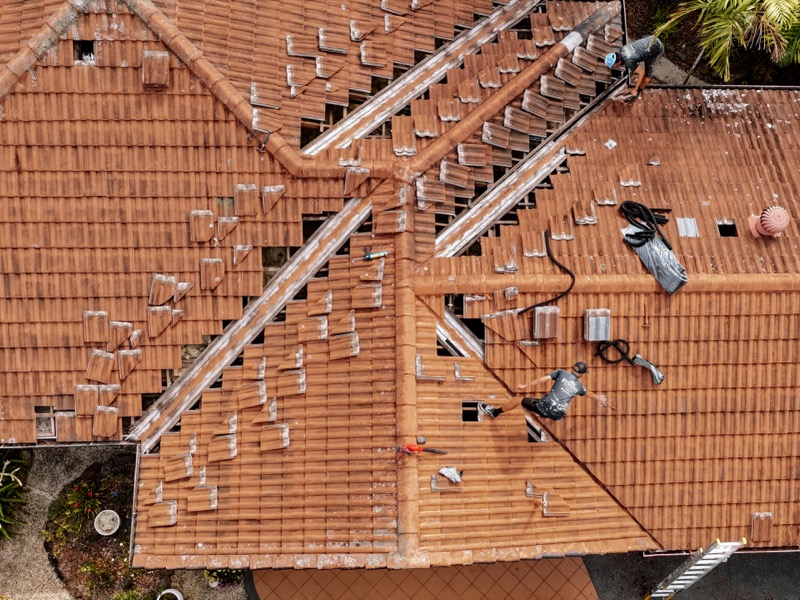
Roof Permits in Queensland: What You Need to Know
If you're planning any roofing work on your Gold Coast, Brisbane, or Sunshine Coast property, understanding Queensland's permit requirements isn't just helpful—it's essential. Getting it wrong can result in hefty fines, forced demolition of non-compliant work, and serious complications when you sell your property.
In this comprehensive guide, I'll walk you through everything you need to know about roof permits in Queensland. After 25+ years working on roofs across South East Queensland, I've seen firsthand what happens when homeowners skip the permit process or misunderstand the requirements. Trust me, it's far easier (and cheaper) to do things right from the start.
By the end of this article, you'll understand exactly when you need a permit, how to apply, what it costs, and how to avoid the common pitfalls that catch Queensland homeowners off guard.
Understanding Building Permits for Roofing Work in Queensland
In Queensland, building permits fall under the jurisdiction of the Queensland Building and Construction Commission (QBCC) and are governed by the Building Act 1975 and the Building Regulation 2021. These regulations exist to ensure all building work meets safety standards and complies with the Building Code of Australia (BCA).
When it comes to roofing, permits serve several critical purposes:
- Structural safety: Ensuring your roof can withstand Queensland's cyclonic winds, particularly in Wind Region B (which covers most of the Gold Coast and Brisbane)
- Fire safety: Confirming materials meet bushfire attack level (BAL) requirements where applicable
- Waterproofing compliance: Protecting your home from our subtropical rainfall and humidity
- Property value protection: Maintaining accurate records of work completed on your property
The permit process involves submitting your plans to either a private building certifier or your local council for approval. Once approved, the work must be inspected at various stages to confirm compliance.
When Do You Need a Roof Permit in Queensland?
Work That Requires a Building Permit
Under Queensland legislation, you'll need a building permit for:
Complete Roof Replacement
If you're replacing your entire roof structure—including the frame, battens, and roofing material—you'll need a permit. This applies whether you're replacing like-for-like or changing materials (such as converting from tiles to Colorbond).
Structural Modifications
Any work that alters the structural integrity of your roof requires approval. This includes:
- Removing or adding roof trusses
- Changing roof pitch or shape
- Adding skylights (particularly larger installations)
- Creating roof openings for ventilation systems
- Converting roof space to liveable area
Material Changes Affecting Weight or Fire Rating
Switching from lightweight roofing (such as metal) to heavyweight (such as concrete tiles) affects structural load calculations. Similarly, if your property falls within a bushfire-prone area, changing materials may require reassessment of your BAL rating.
Extensions and Additions
Any new roof structure attached to your existing home, including carports, pergolas with roofing, and room additions, typically requires a permit.
Work That Generally Doesn't Require a Permit
Some roofing work falls under "exempt" or "self-assessable" categories:
Minor Repairs
- Replacing individual broken tiles (up to 20% of total roof area)
- Fixing minor leaks
- Replacing damaged flashing
- Clearing and repairing gutters
- Repointing ridge capping
Re-roofing with Same Materials
In many cases, re-sheeting your roof with the same type of material (metal to metal, for example) without structural changes may not require a permit—but this is where it gets complicated.
Here's the catch: even when replacing like-for-like, if your roof was originally installed under outdated building codes, bringing it up to current standards might require approval. This is particularly relevant for homes built before 1982, when wind loading requirements were significantly different.
Roof Coatings and Restoration
Applying protective coatings, cleaning, and general roof restoration work typically doesn't require a permit, provided you're not making structural changes.
The Grey Areas: When to Seek Clarification
Some situations aren't clear-cut:
- Installing solar panels (usually exempt, but check with your certifier)
- Adding roof ventilation whirlybirds (generally exempt for standard installations)
- Re-roofing heritage-listed properties (additional approvals may be needed)
- Properties in flood or erosion-prone areas (may trigger additional requirements)
When in doubt, contact your local council or a private certifier. A quick phone call can save you thousands in rectification costs.
The Queensland Roof Permit Application Process
Step 1: Determine Your Assessment Level
Queensland uses a tiered assessment system:
Self-Assessable Work: You (or your licensed contractor) can assess compliance without formal approval for minor work.
Notifiable Work: Some work requires notification to council but not full approval.
Assessable Development: Most significant roofing work falls here, requiring formal application and approval.
Step 2: Choose Your Certification Path
You have two options:
Private Building Certifier
Most Queensland homeowners choose this route for roofing work. Private certifiers are typically faster and more accessible. At Radiant Roof Repairs, we work with several trusted certifiers across the Gold Coast and can recommend professionals who understand local requirements.
Local Council
You can lodge applications directly with Gold Coast City Council, Brisbane City Council, or Sunshine Coast Council. This option often takes longer but may be preferred for complex projects.
Step 3: Prepare Your Documentation
For a typical roof permit application, you'll need:
- Site plans: Showing your property boundaries and building location
- Roof plans: Detailed drawings showing the proposed work
- Engineering specifications: Particularly for structural changes or in high-wind areas
- Product specifications: Technical data sheets for roofing materials
- Energy efficiency assessments: May be required under Section J of the NCC
- Form 1 - Application for Building Development Approval
For straightforward re-roofing, your licensed roofing contractor should be able to provide most technical documentation.
Step 4: Submit and Pay Fees
Current permit fees in Queensland vary based on the value of work:
- Work valued under $5,000: Approximately $150-$250
- Work valued $5,000-$20,000: Approximately $300-$500
- Work valued $20,000-$50,000: Approximately $500-$800
- Work over $50,000: Fees increase proportionally
These figures are indicative—check current rates with your chosen certifier or council.
Step 5: Await Approval
Private certifiers typically process straightforward applications within 5-10 business days. Council applications may take 15-30 business days or longer.
Step 6: Display and Commence Work
Once approved, your permit must be displayed on-site before work commences. Your contractor should arrange this.
Step 7: Inspections and Completion
Mandatory inspection stages typically include:
- Frame stage (if structural work is involved)
- Completion stage
After final inspection, you'll receive a Form 21 (Final Inspection Certificate) confirming compliance.
Permit Costs and Timeline Expectations
What to Budget for Permits
Beyond the application fees mentioned above, factor in:
- Engineering reports: $300-$800 depending on complexity
- Surveyor costs (if required): $200-$500
- Private certifier fees: $400-$1,200 depending on project scope
- Council fees (if applicable): Varies by council
For a standard re-roofing project, total permit-related costs typically range from $500 to $1,500.
Realistic Timelines
Plan your project timeline carefully:
Gold Coast Specific Note: During peak storm season (November to April), certifiers and councils experience higher workloads due to increased repair applications. If you're planning major roofing work, consider scheduling outside this period to avoid delays.
Common Permit Mistakes Gold Coast Homeowners Make
Mistake 1: Assuming All Repairs Are Exempt
I've seen homeowners proceed with what they thought was minor repair work, only to discover they've triggered permit requirements. A common scenario: replacing a few damaged tiles leads to discovering structural damage, which leads to truss replacement, which absolutely requires a permit.
Solution: Have a licensed roofing professional inspect your roof before commencing any work. At Radiant Roof Repairs, our initial assessments identify the full scope of required work so you can plan accordingly.
Mistake 2: Using Unlicensed Contractors
In Queensland, any roofing work over $3,300 (including labour and materials) must be completed by a QBCC licensed contractor. Using an unlicensed tradesperson creates multiple problems:
- No insurance coverage if things go wrong
- Difficulty obtaining permits
- No recourse through QBCC if disputes arise
- Potential issues with your home insurance
Solution: Always verify your contractor's QBCC license number on the official QBCC website.
Mistake 3: Starting Work Before Approval
The temptation to start work while waiting for permits is strong, especially when you have a leaking roof during storm season. Resist this urge. Commencing work without required approvals can result in:
- Fines up to $66,725 for individuals
- Orders to demolish non-compliant work
- Complications with future property sales
Solution: For genuine emergencies, emergency repairs to make a building safe are generally permitted. Document everything with photos and timestamps, and lodge your permit application immediately.
Mistake 4: Not Checking Heritage or Overlay Requirements
Gold Coast, Brisbane, and Sunshine Coast all have heritage-listed properties and special overlay areas (flood zones, bushfire areas, character precincts). These trigger additional approval requirements that standard permit applications don't cover.
Solution: Check your property's planning scheme overlay before proceeding. Your certifier can assist with this.
Mistake 5: Ignoring Neighbour Notification Requirements
Certain roofing work, particularly near boundaries or affecting shared structures, may require formal neighbour notification.
Solution: Discuss boundary issues with your certifier early in the process.
Queensland-Specific Roofing Regulations You Should Know
Wind Loading Requirements
South East Queensland falls primarily within Wind Region B, requiring roofs to withstand wind speeds up to 105 km/h for serviceability and 135 km/h for ultimate strength. Homes in certain coastal and elevated areas may face higher requirements.
This affects:
- Fixing patterns for roof sheeting
- Tie-down specifications
- Material choices
Cyclone Standards
While the Gold Coast doesn't experience direct cyclone hits frequently, our proximity to cyclone-prone areas means roofing standards incorporate cyclonic considerations. Any roof work must comply with AS 1170.2 (Wind Actions) and AS 4055 (Wind Loads for Housing).
Bushfire Attack Level (BAL) Compliance
Properties identified in bushfire-prone areas must comply with AS 3959 (Construction of Buildings in Bushfire-Prone Areas). Your BAL rating affects permissible roofing materials:
- BAL-LOW to BAL-12.5: Most materials acceptable
- BAL-19 to BAL-29: Metal roofing preferred; timber restrictions apply
- BAL-40 to BAL-FZ: Strict material requirements; consult a specialist
Energy Efficiency (Section J)
The National Construction Code's Section J energy efficiency provisions affect roofing choices. Requirements include minimum insulation R-values, which in Queensland's climate zone 2 typically means R2.7 to R4.1 for ceilings.
Pool Safety Barriers
If your roofing work involves structures near swimming pools (such as a pergola or carport), pool safety barrier compliance may be triggered—even for existing non-compliant barriers that have been "grandfathered."
Working with Professional Roofers: The Permit Advantage
Why Licensed Contractors Simplify the Process
Experienced QBCC licensed roofing contractors handle permit requirements regularly. Working with a professional offers significant advantages:
Knowledge of Current Requirements
Building codes update regularly. Contractors working across multiple projects stay current with requirements in ways that homeowners managing a single project cannot.
Established Certifier Relationships
At Radiant Roof Repairs, we've built relationships with certifiers across the Gold Coast, Brisbane, and Sunshine Coast over 25+ years. This means smoother applications and faster approvals.
Compliant Documentation
We prepare specification documents that certifiers expect to see, reducing back-and-forth queries that delay approvals.
Coordinated Inspections
We schedule mandatory inspections at appropriate stages, ensuring continuous workflow and avoiding costly re-inspections.
What to Expect from Your Contractor
A reputable roofing contractor should:
- Advise whether your project requires permits
- Provide written quotes including permit-related costs
- Coordinate with certifiers on your behalf (or guide you through the process)
- Ensure all work meets current building codes
- Provide documentation for your records upon completion
Red Flags to Watch For
Be cautious if a contractor:
- Suggests skipping permits to save money or time
- Cannot provide their QBCC license number
- Refuses to put agreements in writing
- Asks for full payment upfront
- Has no physical business address
Frequently Asked Questions About Roof Permits in Queensland
Do I need a permit to replace my roof with the same material?
It depends on several factors. If you're replacing roofing sheets or tiles without any structural modifications, and the replacement covers less than 20% of the roof area, you likely don't need a permit. However, if you're replacing the entire roof covering, even with the same material type, building codes may require the work to meet current standards, which could trigger permit requirements. Additionally, homes built before 1982 may face additional considerations due to changed wind loading requirements. The safest approach is to consult with a private certifier or your local council before commencing work.
How much does a roof permit cost in Queensland?
Total permit-related costs typically range from $500 to $1,500 for standard residential roofing projects. This includes the application fee ($150-$800 depending on work value), private certifier fees ($400-$1,200), and any required engineering reports ($300-$800). Council fees vary by jurisdiction. These costs are a small investment compared to the potential penalties for non-compliant work, which can exceed $66,000 for individuals.
How long does it take to get a roof permit approved?
Private certifiers typically process straightforward applications within 5-10 business days. Council applications may take 15-30 business days or longer, particularly during busy periods following major storm events. Complex projects requiring engineering assessments or additional approvals (heritage, flood overlays, etc.) can take significantly longer. We recommend allowing at least 4-6 weeks from initial application to approval for budgeting and scheduling purposes.
Can I get a permit after the work is done?
Technically, you can apply for retrospective approval, but this is problematic and not guaranteed. The certifier must assess the work as-built, which may require invasive inspections (removing sections of roofing to check frame work). If the work doesn't comply with current standards, you may face expensive rectification requirements or, in worst cases, demolition orders. It's always preferable to obtain permits before commencing work.
What happens if I do roofing work without a permit?
The consequences can be severe. Individuals face fines up to $66,725 under the Building Act 1975. Beyond fines, councils can issue enforcement notices requiring rectification or demolition of non-compliant work. When you sell your property, conveyancers will identify unpermitted work through council records, potentially derailing sales or significantly reducing your property's value. Your home insurance may also be voided for claims related to non-compliant work.
Do I need a permit to install solar panels on my roof?
In most cases, standard residential solar panel installations are exempt from building permits in Queensland, provided they don't materially affect the structural adequacy of the roof. However, large installations, installations on heritage buildings, or systems integrated into roofing materials (building-integrated photovoltaics) may require approval. Electrical permits are a separate requirement handled by your solar installer.
Are there different permit requirements for the Gold Coast, Brisbane, and Sunshine Coast?
Queensland building permit requirements are consistent state-wide under the Building Act 1975 and Building Regulation 2021. However, local planning scheme overlays vary between councils. Gold Coast City Council, Brisbane City Council, and Sunshine Coast Council each have different heritage registers, flood maps, and character area designations that may trigger additional requirements. Always check your specific property's planning overlays with your relevant council.
Do I need a permit for a roof restoration (cleaning and coating)?
Generally, no. Roof restoration involving cleaning, repointing ridge caps, replacing broken tiles, and applying protective coatings doesn't require building approval, as these are maintenance activities that don't affect structural integrity. However, if your restoration uncovers structural damage requiring repair, the scope changes and permits may become necessary.
What permits do I need for a carport or pergola roof?
Carports and pergolas with roofing typically require building approval as they're Class 10a structures under the Building Code of Australia. The application process is similar to other roofing work: submit plans, obtain approval from a certifier or council, and arrange inspections. Structures under 10 square metres may have reduced requirements—check with your certifier.
How do I check if my property has special permit requirements?
Access your local council's online mapping tools. Gold Coast residents can use the City Plan Interactive Mapping, Brisbane residents can use the City Plan Viewer, and Sunshine Coast residents can use the Development.i mapping system. These tools show overlay codes affecting your property, including flood zones, bushfire areas, heritage listings, and character precincts. Alternatively, a private certifier can conduct this research for you.
Can my roofing contractor handle the permit application for me?
Yes, in most cases. Experienced contractors regularly coordinate permit applications on behalf of clients. At Radiant Roof Repairs, we guide homeowners through the process or handle applications directly, depending on client preference. This ensures documentation meets certifier expectations and reduces the chance of delays from incomplete applications.
What's the difference between a building permit and development approval?
A building permit (formally called "building development approval" in Queensland) confirms your proposed building work complies with the Building Code of Australia and relevant standards. Development approval (under the Planning Act 2016) relates to land use and planning scheme compliance. Most straightforward residential roofing work only requires building approval, but projects affecting heritage buildings, prominent visual locations, or involving material changes of use may require both.
Do insurance companies require proof of permits?
Home insurance policies typically require all building work to be completed lawfully and to applicable standards. While insurers don't routinely check permit records, claims investigations following incidents may uncover non-compliant work. If your insurer determines that unpermitted work contributed to damage, your claim may be denied. Keeping permits and completion certificates provides valuable protection.
How long is a building permit valid?
In Queensland, a building development approval is valid for two years for substantial work to commence, and six years for all work to be completed. These timeframes start from the date of approval. If your project is delayed beyond these periods, you'll need to apply for an extension or lodge a new application.
What should I do if I discover unpermitted roof work when buying a property?
This is a common issue in Queensland's older housing stock. Your options include: requesting the vendor obtain retrospective approval before settlement, negotiating a price reduction to cover rectification costs, purchasing building indemnity insurance (where available), or walking away from the purchase. Your conveyancer should advise on the best approach based on the nature and extent of the unpermitted work.
Conclusion: Navigate Roof Permits with Confidence
Understanding Queensland's roof permit requirements might seem overwhelming, but it doesn't have to be. The key principles are straightforward:
- When in doubt, check. A quick call to a certifier or council can clarify whether your project needs approval.
- Work with licensed professionals. QBCC licensed contractors like Radiant Roof Repairs handle permit requirements regularly and can guide you through the process efficiently.
- Factor permits into your timeline and budget. Allow 4-6 weeks for approvals and $500-$1,500 for permit-related costs on standard projects.
- Keep documentation. Store your permits and completion certificates safely—they're valuable when selling your property or making insurance claims.
- Never skip required permits. The short-term savings aren't worth the potential fines, rectification costs, and property sale complications.
Queensland's building regulations exist to protect you, your family, and your investment. Our subtropical climate, storm exposure, and specific wind loading requirements make compliant roofing work genuinely important—not just a bureaucratic exercise.
If you're planning roofing work on your Gold Coast, Brisbane, or Sunshine Coast property and have questions about permit requirements, the team at Radiant Roof Repairs is here to help. With 25+ years of local experience, we've navigated the permit process hundreds of times and can ensure your project proceeds smoothly from initial assessment through to final approval.
Give us a call on 0480 855 390 to discuss your roofing project and get clarity on the permit requirements for your specific situation.
*Article by Daniel Morrison, QBCC Licensed Roofing Specialist with 25+ years Gold Coast experience.*